Tag Archive for: Self-Supporting Structures a

Back Where It Began

Thanks to Tadeja from Citywall, my little sister Julija and I got an invitation to work in a small gym in Chongqing. It has been a long-time wish of mine to return to this beautiful city, where I kept coming back for the World Cup circuit from 2012 until 2018. I never really liked big cities, but Chongqing left a wonderful impression on me.

After a long journey and almost missing a few connecting flights, we finally arrived in Chongqing. We were warmly welcomed by Maxine and Eric Wu, who took us straight to our hotel. Since the Magic Lab gym was within walking distance, we went to take a quick look at it. It had a very nice energy—a good selection of holds, just the right size for a friendly atmosphere, and neighbors who feed and take care of the local cats. Of course, the cutest one ended up becoming the gym cat. We had a typical Chinese dinner downstairs after meeting the man of the house, Eric. We shared stories about our lifestyles over a few light Chinese beers and ended up chatting late into the night with some more drinks and great conversation.

I slept in late since we had no work on day two. I skipped breakfast and met Maxine and Julija in the lobby around midday. Maxine was our guide for the day, taking us to some great spots around the city. We visited some beautiful places I hadn’t seen before, and I got the feeling that China has truly grown into a great, modern place. More importantly, our guide Maxine was fantastic. She was happy to take us around, and her warm energy made the whole experience so much more interesting. The weather was also on our side, as they had been having many rainy days—a complete contrast to the weather Julija and I were used to from the World Cups years ago. Eric joined us later for the massage, and our day finished in the city center after midnight, sipping wonderful cocktail at the exact place that had left the biggest mark on my heart during my very first visit to Chongqing.


Friends, Climbing & Chongqing


Day three was a workday. We showed up late in the morning to readjust some boulders, which we later climbed on in front of a crowd. People were impressed by our climbing and listened carefully to the talk we gave together with Eric. He highlighted some of the milestones of our climbing careers, and we gave away some gifts from our sponsors, Illusion and Karpos. We also signed posters and took photos with our fans. We wrapped up the day with a traditional hot pot for dinner and went to bed to recharge.


The next day was my favorite. We rearranged some boulders and gave lessons to the locals. It was an incredible crowd that absorbed all of our knowledge. It was a relatively small group of climbers, and since we had enough time, I believe we managed to share almost all of our tips with every single one of them during a full day of hanging out. Later, we met up with our closest friends in our hotel room to play games, and we ended the night clubbing until 6:00 in the morning.

Luckily, we had until midnight the next day to set 11 boulders each. We filled up every empty space on the wall and set some incredible problems for the local community. We explained the movement and ideas behind the boulders in front of the camera, and gave away our last autographs and gifts to the locals.

We then had two days left to explore the nature and other sights around the city. Our hosts, whom we could by now call good friends, took us to a spot where we finally got to touch some real rock. Despite the poor weather conditions, we managed to send some sport routes up to 7c. The climbing was tough due to the high humidity, but it was still a lot of fun. Afterward, we experienced more of the local cuisine, went to a spa, and spent the entire next day shopping and eating. We received some meaningful gifts from our friends and left Chongqing with warm hearts and a difficult goodbye—even though we know we are going to see each other again soon.


Jernej Kruder x Citywall


The National Climbing Center Nieuwegein

Is set to become one of the largest and most advanced climbing facilities in Europe. With over 5,500 m² of climbable surface and a 5,100 m² facility footprint, the project represents a major investment in the future of indoor climbing and active recreation in the Netherlands.


Citmat: delivering high-performance safety flooring designed to support climbers from their very first move to their biggest challenges.


The center will feature lead climbing walls reaching 18 meters in height, extensive bouldering areas, speed climbing, auto belay routes, training zones, outdoor climbing facilities, and dedicated spaces for youth programs, events, and competitions. Designed to serve both recreational climbers and elite athletes, the facility creates a comprehensive destination for sport, community, and performance.

Large-scale climbing centers continue to demonstrate their value as sustainable recreational investments, attracting diverse user groups, supporting local communities, and creating long-term opportunities for growth. The National Climbing Center Nieuwegein is an excellent example of how modern climbing infrastructure can become a regional destination and a catalyst for participation in the sport.


Lead climbing walls reaching 18 meters in height.


Citywall is proud to contribute to projects that push the boundaries of climbing facility development across Europe. From community climbing gyms to world-class climbing destinations, we support owners, investors, and operators in creating facilities that deliver lasting value and exceptional climbing experiences.

Explore the gallery and discover how one of Europe’s most ambitious climbing projects is coming to life.


Interested in building a world-class climbing facility? Get in touch with us to learn more.

📩 info@citywall.eu
📞 +386 41 953 855


Photo credit: Anže Sever


Integrating Climbing Walls into Heritage Buildings

Preserving Heritage Through Minimal Intervention

At Citywall, we believe that the most successful architectural interventions are those that respect the identity of a place while creating opportunities for new experiences.

As cities evolve and buildings adapt to changing social and economic needs, architecture is increasingly challenged to support multiple functions within existing structures. Historic buildings, industrial facilities, religious spaces, and underutilized properties are being transformed into vibrant destinations that encourage movement, interaction, and community engagement.

Integrating climbing walls into these environments requires more than creativity. It demands a careful balance between heritage preservation, architectural integrity, structural responsibility, and user experience.

Our approach is based on a simple principle: work with the building, not against it.

Architectural Climbing Wall Design for Heritage and Adaptive Reuse Projects

Citywall specializes in the design, manufacture, and installation of commercial climbing walls that integrate seamlessly into heritage buildings, adaptive reuse developments, and contemporary architectural projects.

Rather than imposing new structures onto existing architecture, we develop climbing wall solutions that respond to the history, character, and spatial qualities of each building.

Every project begins with a detailed analysis of the architectural context, structural conditions, heritage requirements, and future use of the space. This process allows us to create climbing environments that enhance the building’s purpose while preserving its original identity.

Whether integrated into a historic warehouse, former industrial facility, church conversion, educational campus, or mixed-use development, our climbing wall systems are designed to complement the architecture rather than compete with it.

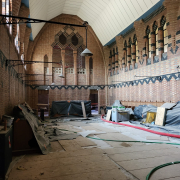
Pastor St. Willibrordus Church


Self-Supporting Structures and Reversible Interventions

Nestled in the heart of an ancient monastery and a renovated chapel, the venue blends heritage and modernity to offer an extraordinary experience. Climbing beneath the arches, moving through this setting steeped in history and beauty, is to embark on a sporting and family adventure in a setting as surprising as it is unforgettable: Gravity Fun, Monastère de la Visitation, Avenue de la Chapelle in 1950 Kraainem


One of the most important aspects of climbing wall integration in sensitive environments is minimizing the impact on the existing structure.

For heritage buildings and protected architectural assets, self-supporting climbing wall structures are often the preferred solution. These systems significantly reduce the need for permanent modifications and help preserve original construction elements.

Whenever possible, Citywall develops fully reversible interventions that allow the space to be restored to its original condition in the future. This approach aligns with the requirements of heritage authorities, conservation professionals, and building owners seeking long-term flexibility.

By reducing structural intervention while maintaining full functionality, we create climbing environments that respect both the building and its future possibilities.

Transforming Existing Buildings into Active Community Spaces

Across Europe and beyond, adaptive reuse architecture is becoming an increasingly important strategy for sustainable urban development.

Former industrial buildings, warehouses, churches, schools, and public facilities are being reimagined as destinations for recreation, education, and community engagement.

Commercial climbing walls offer a unique opportunity to activate these spaces while preserving their architectural significance.

By introducing climbing experiences into existing buildings, developers and architects can create environments that encourage physical activity, social interaction, and cultural value without compromising the original character of the structure.

The result is a meaningful connection between past, present, and future — where historic architecture continues to tell its story while supporting new forms of use and engagement.


Bouldering in Veldhoven’s Sint-Willibrorduskerk: a unique climbing experience!


The Roof – Maison de l’escalade in Rennes, France, is a renowned bouldering gym housed inside the historic Hôtel-Dieu Hospital complex


Climbing Wall Solutions for Architects, Developers, and Climbing Centers

Citywall collaborates with architects, developers, municipalities, heritage consultants, educational institutions, and climbing center operators to deliver integrated climbing wall solutions tailored to each project.

Our services include:

  • Architectural climbing wall design
  • Commercial climbing wall manufacturing
  • Climbing wall installation
  • Self-supporting climbing wall structures
  • Heritage-sensitive climbing wall integration
  • Adaptive reuse and redevelopment consulting
  • Custom climbing holds and route-setting solutions
  • Indoor and outdoor climbing wall systems

Through close collaboration with project stakeholders, we ensure that every climbing wall contributes to the architectural vision, functional requirements, and long-term value of the building.

Maniak Padoue – Church Saint Antoine De Padoue, Belgium


Respecting the Past. Designing for the Future.

At the heart of every Citywall project is a commitment to responsible design.

We create climbing environments that respect architectural heritage, support contemporary use, and strengthen community connections. By carefully bridging the past, present, and future, our climbing wall solutions enable buildings to evolve while preserving the stories embedded within them.

The result is architecture that remains authentic, adaptable, and relevant for generations to come.

The Citywall Architectural & Design Team
